
Nobody plans for a crash, so most people improvise. That is when small mistakes happen: a car left in a live lane, no photo of the other driver's plate, a tow to a yard that charges by the day. This checklist puts the steps in the order they matter. It is general information from a Honolulu body shop, not legal advice, and it applies to everyday collisions on Oahu roads.
1. Stop, breathe and check for injuries
Stop as soon as it is safe to do so. Turn on your hazard lights. Check yourself first, then your passengers, then the people in the other vehicle.
If anyone is hurt, if someone is trapped, or if there is fuel leaking or smoke, call 911 straight away. Tell the dispatcher where you are as precisely as you can: the road, the direction you were travelling and the nearest cross street, exit or landmark.
Do not move anyone who is injured unless they are in immediate danger, such as from fire or traffic.
2. Get people out of harm's way
Traffic on the H-1 and on busy streets like Nimitz Highway does not slow down much for a fender-bender. If the cars can be driven and nobody is hurt, move them to the shoulder or a nearby lot so they are not blocking lanes. Then get everyone out of the cars and away from moving traffic, behind a barrier if there is one.
If your car cannot move and you are on a freeway, the state runs a Freeway Service Patrol that helps stranded drivers on some Oahu freeways, and the program is free[4]. It is there to clear lanes and keep people safe, which is a different job from towing your car to a shop.
3. Call the police when you need to
Honolulu Police separate collisions into major ones, with damage of $3,000 or more, and minor ones, with damage under $3,000[1]. If anyone is injured, or the damage looks like it could reach that level, call the police and stay at the scene.
For a minor crash with no injuries, you may still want an officer there if the other driver is uncooperative, seems impaired, or will not share their details. HPD's policy also says officers do not respond to minor, no-injury collisions that are reported after the drivers have left the scene[1]. If you want an officer involved, call from the scene.
4. Exchange information, calmly
Whether or not police come, swap details with the other driver. At a minimum, get:
- Their full name, phone number and address
- Their driver's license number
- The vehicle's license plate, make, model and color
- Their insurance company and policy number
- The names and phone numbers of any witnesses
HPD officers give drivers a standard information-exchange form, called the HPD-197, at collisions they attend[1]. Keep it with your other papers. Be polite, stick to facts and avoid arguing about fault at the scene. What you say can end up in a report or a claim file.
5. Take the photos you will wish you had later
Only take photos when it is safe. Stay out of traffic, and never stand between two vehicles that could roll. A few minutes of photos now saves hours of back-and-forth later. Take:
- Wide shots of the whole scene from a few angles, showing where each car ended up, lane markings, signs and signals
- Each vehicle, all four sides, so the photos show what was and was not damaged
- Close-ups of every damaged area, plus the other car's license plate
- Anything that explains what happened, such as skid marks, debris, a blocked view or a broken signal
- The other driver's documents, if they are happy for you to photograph their license and insurance card
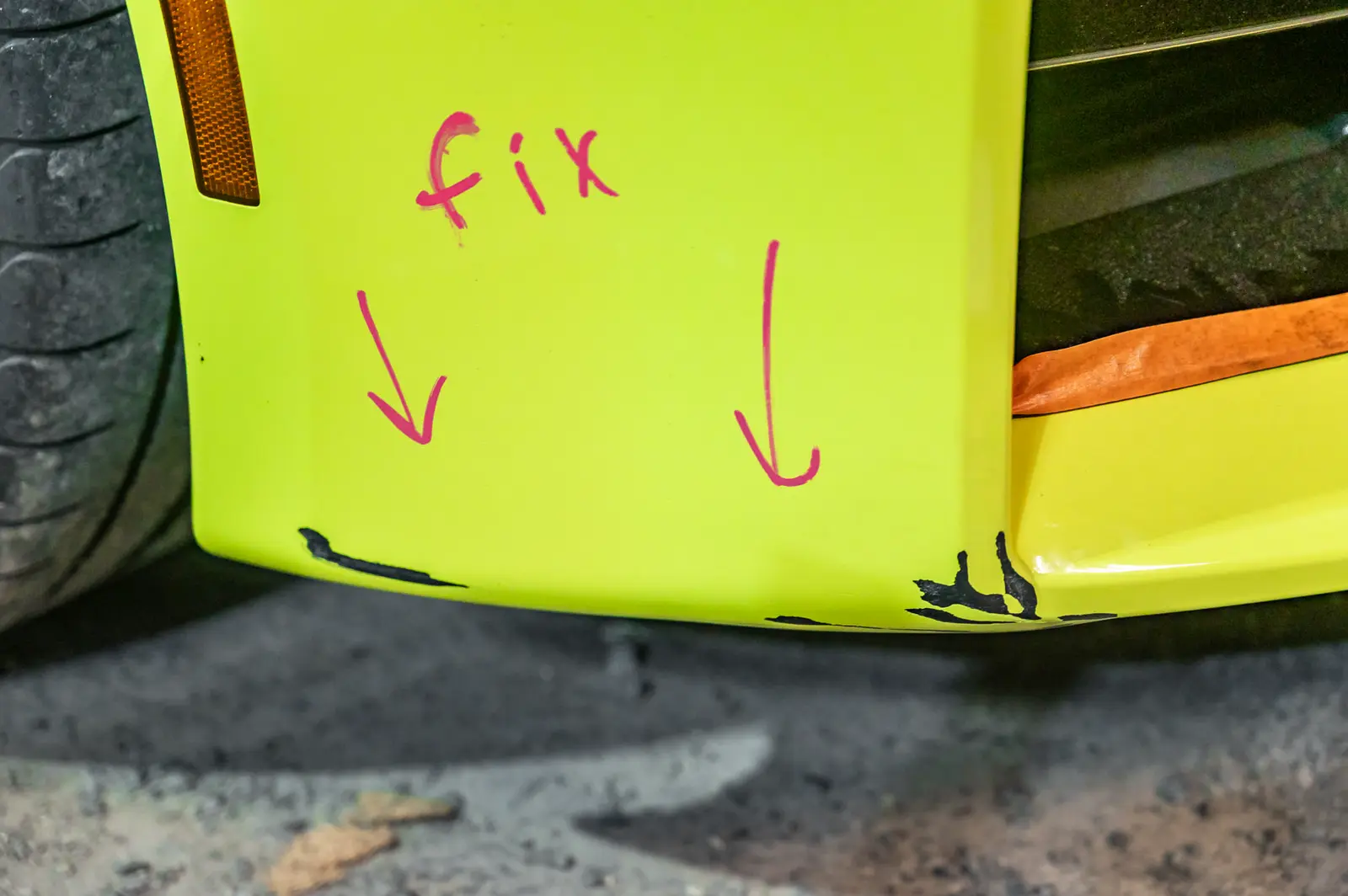
These photos also help the body shop. When you send a damage request to a shop, wide, medium and close-up photos of each damaged area let the team see where the damage sits and what might be hiding behind it.
6. Know how to get the police report
If an officer attended, ask for the report number before you leave. Later, you can request a copy of the report from HPD's Records Division by calling 808-723-3258[2]. HPD's online reporting system is not for collisions[2], so do not wait for an online option.
Your insurer will ask for the report number, so write it down somewhere you will not lose it.
7. Decide where the car goes before it is towed
If the car cannot be driven safely, it needs a tow. You get to decide where it goes, and that choice matters:
- Tow it once. Taking it straight to the body shop that will repair it avoids a second tow and the storage charges a holding yard may add.
- Tell the tow company about the car. Lowered suspension, body kits, low bumpers and all-wheel drive all change how a car should be loaded. A lay-flat trailer or flatbed avoids dragging a low nose up a steep ramp.
- Take your valuables, garage remote and registration out of the car before it leaves.
Fly Garage runs 24/7 towing on Oahu with a tow truck and a Futura lay-flat trailer, and the team will ask about clearance and access before they confirm the job. For the fastest answer, call 808-341-6511.
8. Start the claim the same day
Call your own insurer as soon as you can, even if the other driver is at fault. Have your policy number, the police report number, the other driver's details and your photos ready.
Hawaii is a no-fault state for injuries. Every auto policy includes personal injury protection, at least $10,000 per person, that pays regardless of who caused the crash[3]. Since January 1, 2026, the minimum liability limits for new and renewed policies are $40,000 per person and $80,000 per accident for bodily injury, and $20,000 for property damage[3]. Your own policy may carry more, so check your declarations page.
When the adjuster asks where the car is, tell them. If you already know where you want it repaired, say so. A shop that handles insurance repairs every day can help you document the damage, talk through the estimate and flag hidden damage found once the car is taken apart.
9. Get the car looked at, even if it seems fine
Modern bumpers are mostly plastic covers over crush structures, brackets and sensors. A small scuff on the cover can sit in front of a cracked absorber or a bent mount. A proper inspection catches that before it turns into a rattle, a warning light or a panel gap that never closes.
If the car drives differently, pulls to one side or a door no longer shuts the way it did, mention it. Those are worth checking by a shop that does collision repair and paint and can assess the structure as well.
10. Keep a simple record
Start a note on your phone with dates, claim numbers, the adjuster's name and phone, and every call you make. Save receipts for towing, a rental and anything else you pay for. If you run into a problem with an insurer that you cannot resolve, the Hawaii Insurance Division takes consumer complaints, by phone at 1-844-808-3222 or online[5].
The short version
Get safe. Call 911 if anyone is hurt. Move out of traffic if you can. Call the police when the damage or the situation calls for it. Exchange details, take photos, and get the report number. Choose where the car is towed, and start the claim the same day.
If you are on Oahu and need a tow or a damage check, the Fly Garage body shop is on Kaliawa Street in Honolulu, and the towing line answers 24/7.