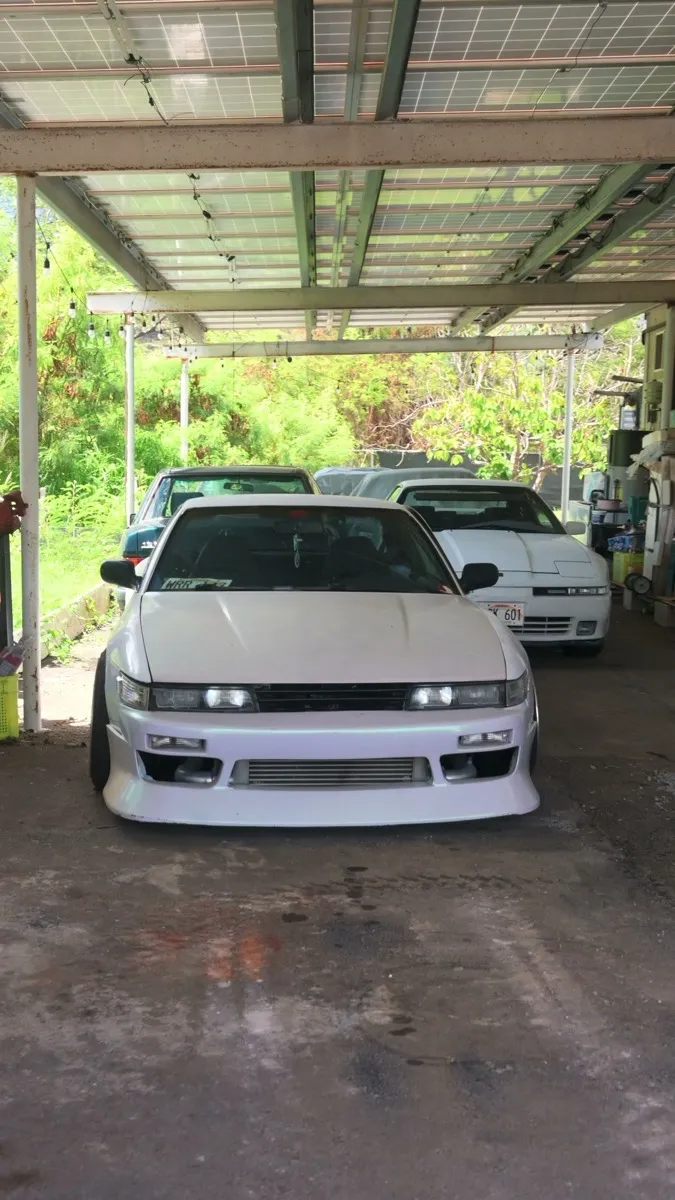

Living on Oahu means a car spends a lot of its life outdoors, in strong sun and ocean air. Add the occasional haze of vog drifting up the island chain, and paint has a harder life here than in many places. None of this means your car is doomed to fade. It means a little routine care goes a long way. Here is what each threat does, and what actually helps.
Sun: the slow fade
Sunlight is the biggest long-term threat to paint. Ultraviolet light breaks down the clear coat over time. First the shine dulls, then the clear coat can turn chalky, crack or peel, and once it goes, the color underneath fades quickly.
How strong is the sun here? Honolulu is one of the cities in the daily UV Index forecast run by NOAA and the EPA[4], and the EPA's UV Index runs on a scale from 1 to 11 and above[5]. You can check Honolulu's forecast there any day. Whatever the number, your car is out in it every day it is parked outside.
What helps:
- Park in shade or under cover whenever you can. A carport, a covered parking structure or even a tree that does not drop sap makes a real difference over the years.
- Keep a layer of protection on the paint. Wax, a paint sealant or a ceramic coating gives the clear coat a sacrificial layer that takes the sun first.
- Use a car cover for a car that sits for long periods, as long as the car is clean when it goes on. A cover over a dirty car can rub grit into the paint.
Salt air: corrosion where you cannot see it
Ocean air carries salt, and salt speeds up corrosion. Kia's owner's manual, for example, lists ocean air alongside road salt and industrial pollution as things that can lead to faster corrosion, and recommends regular washing to remove them[6].
On Oahu that matters most for cars parked near the shore and for the places salt collects: door bottoms, the edges of the hood and trunk, wheel arches and underneath. Paint protects the metal only while it is intact. Wherever paint is chipped or scratched through, salt and moisture get to bare metal and rust can start.
What helps:
- Wash regularly, including the lower panels and wheel arches, not just the parts you can see.
- Rinse after a beach trip or a drive along the water on a windy day.
- Touch up chips quickly. A small stone chip on the hood is a doorway for rust.
Vog: the haze that drifts our way
Vog is volcanic smog. The U.S. Geological Survey describes it as a visible haze made of gas and an aerosol of tiny particles and acidic droplets, formed when sulfur dioxide from the volcano reacts with sunlight, oxygen, moisture and dust[1]. Under light or southerly winds, it can spread along the entire Hawaiian Island chain[3], and USGS notes that some can reach Oahu, more than 200 miles from Kilauea[2].
Whether vog affects your car on a given day depends on the wind and on what the volcano is doing. When it is around, its acidic droplets are a concern for metal. USGS has noted that vog's acidity can speed up the rusting of metal objects, including cars[2]. The same advice applies as with salt: keep the paint intact, keep it clean and protected, and fix chips before they let moisture in.
Bird droppings, sap and other fast-acting damage
Some things damage paint in hours, not years. Kia's manual warns that bird droppings are highly corrosive and may damage painted surfaces within hours[6]. Mazda's manual says bird droppings contain acids that can eat into the clear coat and the color underneath, and that tree sap bonds to the paint[7]. In strong sun, both bake on faster.
What helps:
- Remove droppings and sap as soon as you see them. Soften them with water or a quick detailer and a soft microfiber towel. Do not scrape.
- Do not wipe dry dust off the paint, which drags grit across the finish. Rinse first.
A simple routine that works
You do not need a garage full of products. A routine like this keeps most paint in good shape:
- Wash regularly. Kia recommends washing the car at least once a month[6], and more often helps near the ocean or after a dusty, voggy stretch.
- Wash out of direct sun. The same manual advises against washing in direct sunlight, which dries soap and water into spots before you can rinse them[6]. Early morning or late afternoon is best.
- Use car shampoo, not dish soap. Dish soap strips wax and protection.
- Two buckets and a soft mitt. One bucket for soapy water, one to rinse the mitt, so you are not rubbing dirt back onto the car.
- Dry with a clean microfiber towel to avoid water spots.
- Protect the paint when water stops beading. That is the sign your wax or sealant is wearing off.
- Check for chips every few washes, especially on the hood, mirrors and the lower doors.
If you use a pressure washer, keep a safe distance from the paint and from any chips or edges, so you do not lift them further.
When it is time for a body shop
Care slows wear; it does not reverse it. Bring the car in when you see:
- Clear coat that is peeling or turning white and chalky. Once the clear fails, polishing will not bring it back. The panel needs refinishing.
- Rust bubbles under the paint, often at the edges of the hood, around wheel arches or at the bottom of doors.
- Chips and scratches through to metal that you cannot touch up neatly.
Fly Garage handles paint repair and refinishing, including color matching so a repainted panel blends with the rest of the car. For older cars or projects with rust and tired paint, our restoration page covers rust repair and full refinishing.
If your car has to sit for a while, such as during a deployment, a long trip or a project, covered storage protects it from the worst of the sun. Ask about vehicle storage; the office confirms space and terms.
The short version
Sun fades, salt corrodes, vog adds acid, and droppings and sap etch. Wash regularly out of direct sun, keep a layer of wax or sealant on the paint, park in shade when you can, and fix chips before rust gets a start. When the clear coat fails or rust appears, it is time for a body shop.
To have a paint problem looked at, send photos to the Fly Garage body shop or call 808-285-3272.