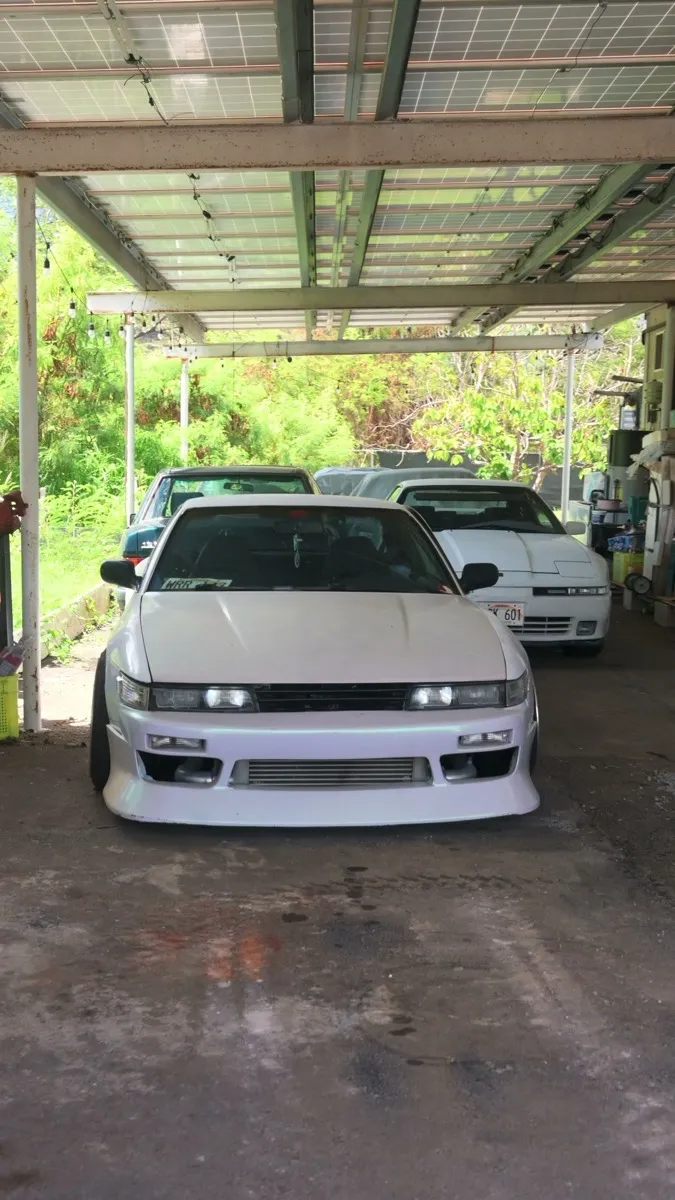

Ask anyone with a lowered car about their worst tow and you will hear the same story: a ramp that was too steep, a scraping sound, and a front lip or splitter that came off worse than whatever sent the car to the shop in the first place. It does not have to happen. With the right equipment and a few minutes of planning, a low car can be loaded without touching anything but the tires.
Why low cars are hard to load
Every car has a few angles that decide what it can climb without scraping. Federal vehicle rules define them. The approach angle is the angle between the ground and a line from the front tire to the lowest point of the front of the car[1]. The breakover angle describes the point where a car would ground out in the middle, between the wheels, when it crests a slope[1].
Lowering a car, or adding a front lip, side skirts or a big splitter, shrinks both angles. A standard car-hauler ramp or a tilt-bed truck can present a slope that is steeper than a low car's approach angle. The result is the bumper meeting the ramp before the front tires do, or the floor pan catching on the hinge point as the car tips onto the deck.
That is why low cars need either a very shallow ramp, a deck that tilts low enough, or a trailer that lowers its whole bed flat to the ground.
What a lay-flat trailer does differently
A lay-flat or drop-deck trailer lowers the entire deck to the ground, so there is little or no ramp to climb. The car rolls or is winched straight across onto a level surface, and the deck lifts back up with the car already level on it.
For a lowered car, that removes almost every point where something can scrape:
- No steep ramp for the front lip to hit
- No sharp crest under the middle of the car
- No need to wedge boards under the tires to fake a shallower angle
Fly Garage's towing team uses a Futura trailer that lowers to the ground for exactly this kind of car, along with a tow truck for everyday tows. You can see it in action in the transport clips on our towing page.
All-wheel drive changes the rules
Even when clearance is not the issue, the drivetrain can be. Many all-wheel-drive cars should not be towed with two wheels on the road, because turning one axle while the other is held still can strain the parts that link them.
Manufacturers are direct about this. Subaru says using a flat-bed tow truck is the recommended method to transport a Subaru, and that the automatic and CVT models that may be towed with all wheels on the ground must stay under 20 mph and within 31 miles, with anything longer or faster on a flatbed[2]. Mazda's owner's manual tells owners to always tow an all-wheel-drive vehicle with all four wheels off the ground[3].
Electric cars add their own instructions, usually in the owner's manual under transport or towing. Read yours before you need it, and have the manual or the manufacturer's towing page ready when you call.
How to book a tow for a low car
When you call for a tow, the most useful thing you can do is describe the car properly. Have this ready:
- Ride height. Is the car lowered, on coilovers or air suspension? Roughly how much space is there under the front bumper?
- Aero parts. Front lip, splitter, canards, side skirts, diffuser or a big rear wing.
- Drivetrain. Front, rear or all-wheel drive, and whether it is a hybrid or electric car.
- Condition. Does it roll and steer? Are any wheels damaged, locked or flat? Does it have keys and a working battery?
- Access. Driveway slope, garage height, gates, parking structure ramps and how close the truck can get.
- Air suspension. If the car has it, can it be raised before loading?
Photos help a lot. A side view of the car at ride height and a shot of the front bumper from low down tell the driver more than a paragraph.
On the day: what good loading looks like
A careful load of a low car is slow, and that is a good sign. Expect the driver to:
- Walk around the car and note existing damage before touching it.
- Raise air suspension, if fitted, to its highest setting.
- Lower the deck and line the car up straight, so it does not have to turn on the deck.
- Roll or winch the car on slowly, watching the front lip and the middle of the car.
- Secure each wheel with straps over the tires, not around suspension arms or the body.
- Recheck the straps after the first stretch of driving.
If you are present, take your own photos before loading and after unloading. It protects everyone.
Where the car goes matters too
If the car is going in for repair, tow it once, straight to the shop that will fix it, rather than to a holding yard first. If it needs to wait somewhere, ask about storage that can keep it covered and secure. Fly Garage offers vehicle storage by arrangement, covered and uncovered, and the office confirms space and terms before the car arrives.
For cars coming in after a collision, the shop can start assessing the damage as soon as the car is unloaded. Our collision repair and paint team welcomes lowered, modified and specialty cars.
Do not forget the destination
Low cars get stuck at the other end too. A steep driveway, a speed hump inside a parking structure or a curb cut can all stop a low car from rolling off safely. Tell the towing team about the drop-off as well as the pickup, so they can plan where to unload.
The short version
Low cars need low angles. A trailer that lowers its whole deck flat, careful loading and straps on the tires keep the car from scraping. All-wheel-drive cars generally need all four wheels off the ground, and the owner's manual has the final word for your car.
If you need a tow on Oahu for a lowered, modified or classic car, call Fly Garage towing at 808-341-6511, 24/7, or send the details through the tow request form. The team confirms equipment, access and the plan before they head out.